
What is Pilates, and what are the benefits of pilates?
WHAT IS PILATES?
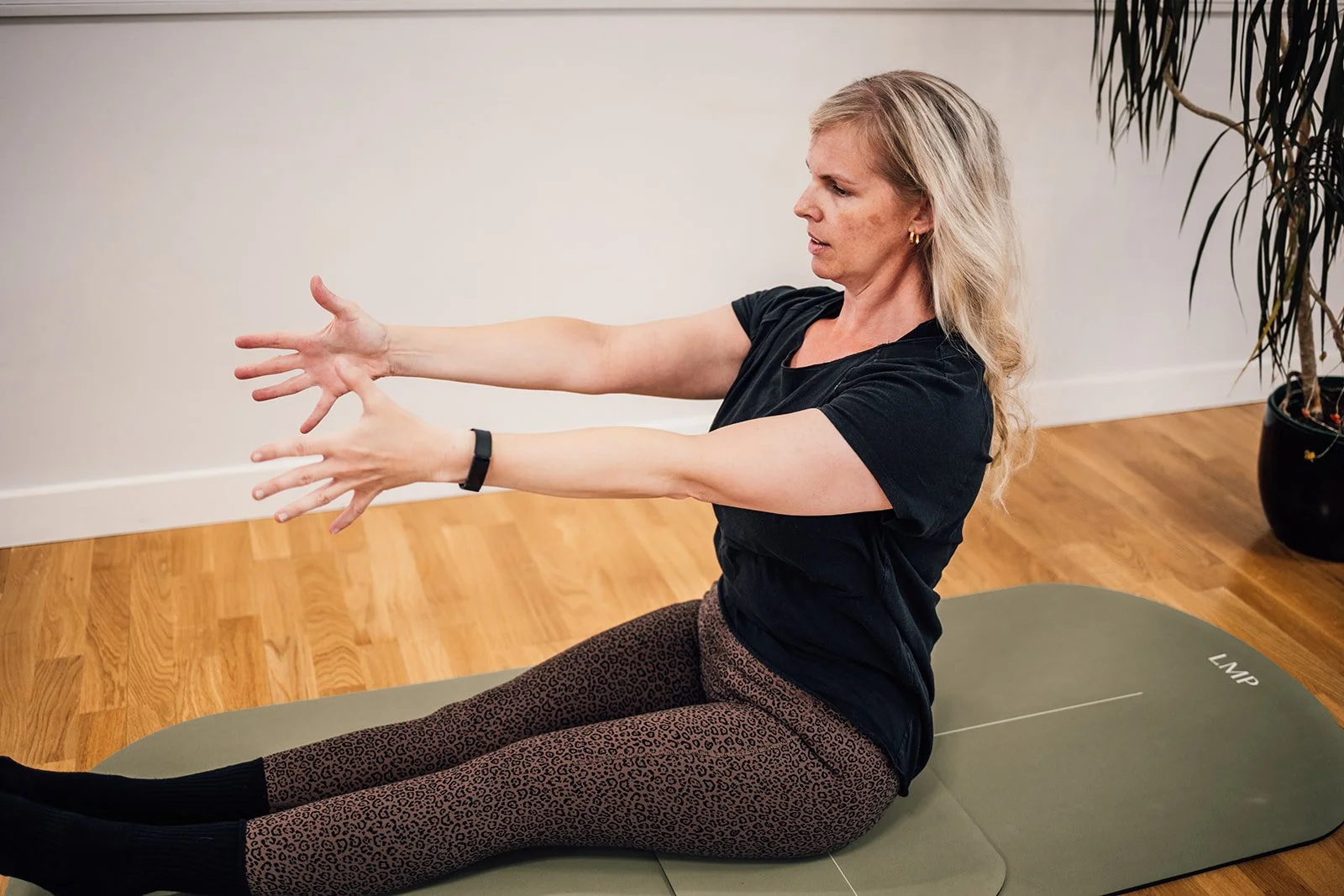
If you’re wondering what Pilates actually is and whether it could be right for you, you’re not alone. Pilates is a low-impact form of exercise that focuses on controlled movement, strength, flexibility, posture, balance, breathing and the connection between the mind and body.
Originally developed by Joseph Pilates, the method has evolved considerably over the years and is now practised by millions of people around the world. While Pilates is often associated with core strength, there is much more to it than that.
From improving strength and mobility to developing better body awareness and balance, there are many potential benefits of Pilates – and it can be adapted for a wide range of ages, abilities and fitness levels.
Exercises are performed on the mat - sometimes using small equipment such as Pilates balls etc, and sometimes on larger spring assisted equipment such as the reformer.
What does low impact exercise mean?
Low-impact exercise gets your heart rate up slowly and causes less pressure on your joints than high-impact exercise. In addition to Pilates, other low-impact forms of exercise are Yoga, Walking, Swimming, Rowing etc. All of these forms of exercise are perceived as being more sustainable – i.e they could be done for much longer into later life. High-impact forms of exercise such as Running, Cross Fit, and sports such as playing Squash and Football etc tend to not be able to be sustained for as long as the stress placed on weight bearing joints such as hips, knees and ankles leads to issues over time. This is why Pilates is such a great sustainable form of movement for life.
What are the benefits of Pilates?
is pilates suitable for beginners?
Pilates isn't just for people who are already fit or flexible. A well-taught Pilates class can offer different options for different bodies and experience levels, making it suitable for people who are completely new to exercise as well as those who are already active.
PILATES CAN improve core strength
Pilates is great at building muscle strength in a targeted way, meaning that we are focusing on certain muscles rather than allowing our already dominant muscles to take the load, which very often happens with other forms of exercise such as weight training. One of the key elements of Pilates is building core strength. The exercises target the muscles in the abdomen, lower back, hips, and pelvis, collectively known as the "powerhouse." A strong core improves stability, supports proper posture, and enhances overall body strength, making everyday activities easier and more efficient.
Pilates Can Improve Flexibility and Mobility
Pilates can improve flexibility and mobility in ways that people do not do as part of their everyday lives allows the body to start to come back to its potential in terms of range of motion and mobility. It’s very important when working on building strength to incorporate flexibility work too as otherwise the muscles can become stronger but shorter leading to a reduced range of motion or mobility. Because there is a focus on lengthening when working the muscles in Pilates, Pilates is unique in that muscles are more likely to lengthen that shorten which is what tends to happen with other forms of exercise such as Weight Training, Running and Cycling.
pilates can help improve posture
Focusing on strengthening certain muscles and lengthening others allows our bodies to become nearer to the ideal Plumb Line posture with less muscular effort. If you are not familiar with Plumb Line Posture Assessment – the Plumb Line is an imaginary straight line from the top of the head to the floor (or you could use an actual Plumb Line if you wanted to which is a piece of string with a weight attached to the bottom). The ideal posture involves our ears, shoulders, hips, knees and ankles stack up along this line when the body is viewed from the side.
pilates can improve stability
Strength and stability of the trunk, pelvis and scapula is hugely important, and being strong and stable in these areas can reduce the risk of injuries (particularly hip, spine and shoulder).
pilates can improve balance and co-ordination
Balance and co-ordination need to be regularly practised/ challenged to maintain the strength, muscle memory and the mind-body connection. Balance and coordination naturally become MUCH harder as we age, so regularly practising this can help us to live well longer, and to reduce the risk of falls and other injuries in older students.
pilates encourages better breathing
Practising Pilates breath tends to allow people to breathe slower and deeper, and not only oxygenates the body more effectively during the exercise period, but also once people understand what that feels like, they tend to be more conscious of their breathing outside of their Pilates practice.
pilates develops body awareness and proprioception
The majority of people have quite poor body awareness and proprioception. Regularly challenging the mind-body connection improves this significantly for the majority of people. Proprioception, also called kinesthesia, is your awareness of your body in space – so for example being able to touch your nose with your eyes closed.
pilates can support the mind-body connection
Pilates encourages mindfulness and concentration during exercises. Every movement requires focus on form, breathing and muscle engagement, fostering a deep connection between the mind and body. Other physiological benefits include increased confidence, reduced stress, improved self esteem - increased strength, better posture and losing weight from exercising more can help increase confidence. Exercising in a mindful way can have a positive impact on stress levels - giving them something to focus on and also another benefit of breathing properly is that this can have a positive impact on mood. Participants also regularly report increased mental clarity as another benefit of Pilates.
pilates can complement injury rehabilitation
Pilates can complement other training methods by helping to develop whole body strength and flexibility, and reduce risk of injury. When exercising mindfully, and increasing the focus on alignment and form, this usually helps people to execute other forms of exercise better - for example they may start to execute squats at the gym much more effectively. An improvement in posture may also help the movement and range of motion in walking or running for example. Pilates is often recommended by physical therapists for injury rehabilitation due to its low-impact nature and focus on controlled, precise movements. It strengthens muscles without putting undue stress on joints, making it an excellent choice for people recovering from injuries or dealing with chronic pain.
pilates can support a healthy active lifestyle
Pilates includes a range of muscle strengthening exercises. If clients are aiming to lose weight, they should choose higher intensity, more dynamic classes, and they should combine their Pilates with a healthy diet and some aerobic exercise such as walking, swimming or cycling.
pilates can support other forms of exercise
Pilates complements other forms of exercise and sports by improving muscular endurance, balance, and coordination. Many athletes incorporate Pilates into their training routines to prevent injuries, enhance their range of motion, and fine-tune their overall performance.
Pilates is recommended for a broad range of participants/ life stages and situations – from people recovering from injuries, to elite athletes, for desk based workers, for older residents in care homes, for children/ teens, and people being re-introduced to exercise after a long break. I don’t know of any other form of exercise that is recommended for so many people and circumstances. Which is why it is no surprise that in Feb 2024 Pilates was voted the most popular form of exercise in over 40 countries in a survey conducted by PureGym. The U.K, USA, Australia, New Zealand all voted Pilates as number 1.
There are Millions of people around the world experiencing the benefits of Pilates - if you aren’t one of them, you might be missing out on something that could change your life - physically and mentally. So get yourself to a class!
looking for a class in derby?
If you're looking for Pilates classes in Derby, I teach friendly, welcoming Mat Pilates classes in Allestree, Darley Abbey and Little Eaton. Classes are suitable for a range of abilities, with options offered throughout the session so you can work at a level that feels appropriate for you. CLICK HERE to see the class timetable.
